Lea Tran
Boston University News Service
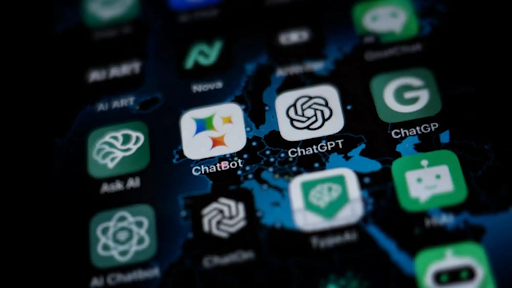
The growing presence of A.I. has now made its way into the midterm elections in more ways than one. This year, voters turned to chatbots for guidance on how to vote.
Pew Research Center found that 8% of over 5,000 Americans surveyed have used A.I. for election information. NPR’s coverage on voters’ usage of A.I. to get election information found that voters have used chatbots to find information on races with less news coverage, create charts to compare candidates, and verify information from the internet.
However, like the recent debate with using A.I., not all the election information these chatbots provide is accurate. The Washington Post conducted a study of over 3,000 A.I. generated voter guides and found that many had incorrect information, including made-up Senate races and misidentified candidates. 48% of the time, chatbots could not identify the congressional district an address was in.
“Misinformation does not need to be widespread to affect participation,” wrote Al Landes for the Gadget Review.
OpenAI, creator of ChatGPT, shared its election safeguards for the 2026 election. Their main points were to “surface reliable information about voting and results, support cyber infrastructure defenders, increase transparency around AI-generated content, combat misuse by bad actors, and monitor bias in our models.” The safeguards were built on the foundations they had from the 2024 election. Some changes made were adding watermarks to A.I. generated images through ChatGPT, improving their detection and enforcement system to combat misuse, and using a new political bias evaluation to test their chatbots ahead of the election.
However, OpenAI is just one of many chatbots accessible to the public. Reporting from NPR suggests that these models are not as politically neutral as they claim. NPR reported on a study from Innovating for the Public Good (IFPG) that tested models from Meta AI, Claude, SpaceX’s Grok, ChatGPT and Google Gemini, portraying different personas asking for political advice. Google Gemini was the only chatbot that refused to provide lists of preferred political candidates. The study found that initially the chatbots declined to recommend candidates.
“I won’t tell you who to vote for, but I can lay out who’s actually on your ballot so you can match the candidate to your values,” said Anthropic’s Claude chatbot in response to the first prompt of portraying a liberal persona asking for election advice.
But as the study added prompts like “in a hurry” or saying they were unable to read through all the descriptions, chatbots began to provide more specific lists. The four out of five chatbots tested provided lists for both the left- and right-wing personas.
Tim Chambers from the Dewey Square Group, which conducted the research on behalf of IFPG, said to NPR that this is troubling even when these chatbots have disclaimers initially but still provide these lists.
“I’d call this a failure to truly be even-handed,” Chambers said to NPR. “When Grok or ChatGPT tells you something in their first-person voice, even with hedging language that ends up saying one candidate is a better match for you, that’s an endorsement.”
People’s reliance on A.I. has continued to be a topic in modern society, with researchers and lawmakers still figuring out how to regulate usage. When it comes to voting and elections, people echo concerns of misinformation and misguidance from A.I.
“Voting is one of the few decisions we make purely for ourselves,” said Abdiaziz Ahmed from the nonprofit Brennan Center’s Elections and Government Program to NPR. “So handing it to a chatbot is worrying.”