By Carol Khorramchahi
Boston University News Service
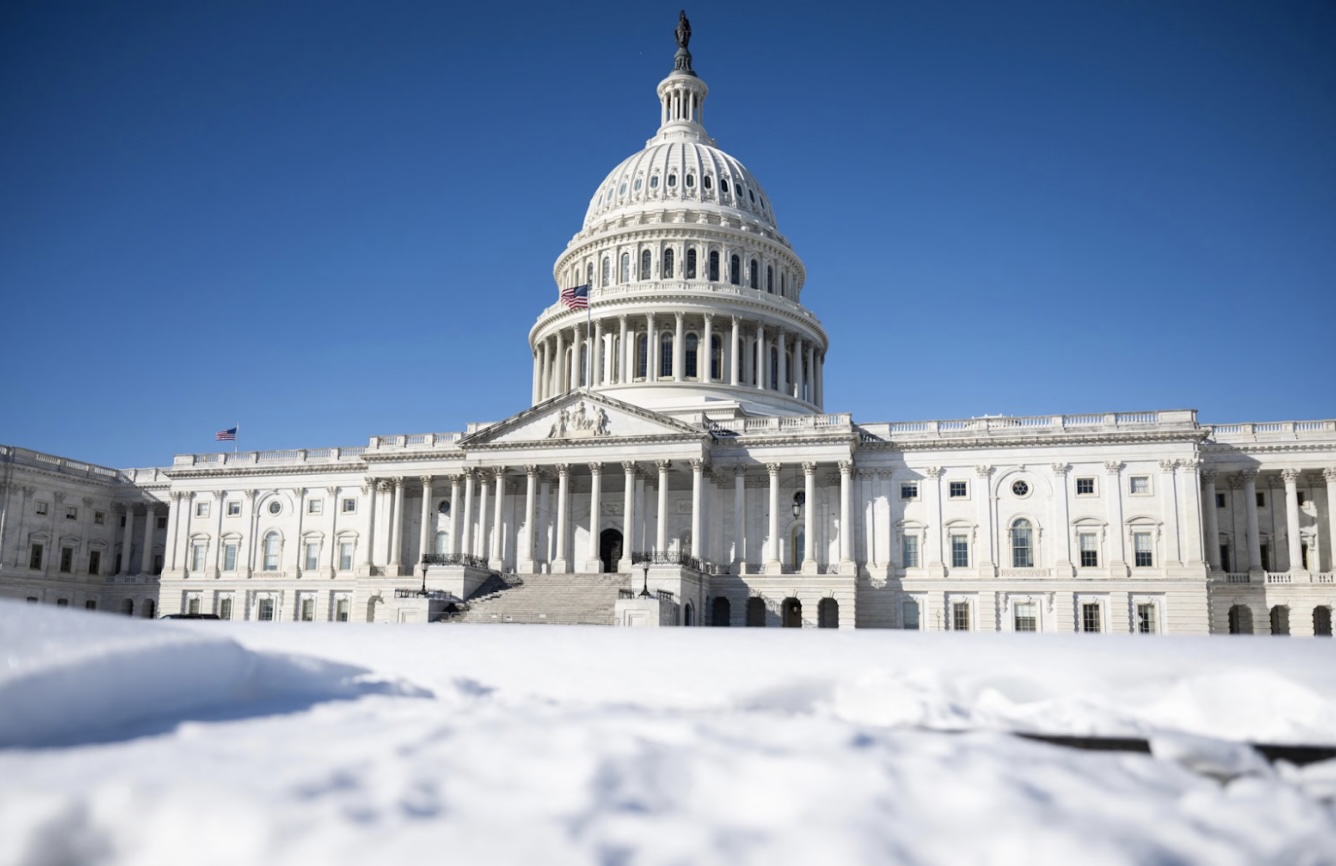
The shutdown arrived the way so many modern Washington crises do: not with a bang, but with a deadline that nobody treated like it was real until it was. In the early hours of Saturday, Jan. 31, parts of the federal government entered a partial shutdown after Congress failed to get a funding deal across the finish line in time, Reuters reported.
It lasted four days. President Donald Trump signed a spending bill into law on Tuesday, Feb. 3, ending the shutdown. This restored funding for major parts of government while leaving the Department of Homeland Security on a shorter leash, funded only through Feb. 13.
Four days is short by shutdown standards. It is also long enough to reveal what a shutdown really is. It is not just a budget problem. It is a national exercise in uncertainty, a reminder that “essential” is a label the government assigns to work, not always to the people doing it.
The quickest way to understand this shutdown is to start with what “partial” actually means.
A shutdown is not a single switch. It is a patchwork. Some agencies keep operating because their funding bills have already been passed. Others run out of money and shift into contingency mode. They divide workers into those required to report because their jobs protect life, property, or national security, and those furloughed and told to stop working altogether. In guidance issued ahead of the lapse, the Office of Personnel Management explicitly described “lapse-affected employees” as including both “furloughed employees” and “excepted employees.”
That framing matters because it explains why shutdowns can feel both dramatic and strangely invisible. Many public-facing services continue, yet thousands of workers are either sent home or told to keep working without immediate pay. The government keeps moving, but the strain is redistributed downward into families, workplaces and local communities that have no vote in the standoff.
This shutdown’s trigger was a political collision between appropriations and enforcement. Negotiations had been moving more smoothly than usual, and Congress had already passed about half of the year’s funding bills, which helped keep many agencies operating through Sept. 30. That earlier progress is why this shutdown did not immediately threaten everything from food benefits to health services, according to an Associated Press explainer published by PBS NewsHour.
Then came the fight over Homeland Security. The AP reported that the shooting deaths of two U.S. citizens in Minneapolis, Alex Pretti and Renée Good, by federal agents changed the dynamic, pushing Democrats to demand policy changes tied to immigration enforcement and accountability for agents as a condition for advancing the remaining Homeland Security funding bill.
In an era where nearly every major policy dispute eventually turns into a deadline, the shutdown was less a surprise than a consequence. The Senate passed a five-bill package and a short-term plan for DHS, but the House was not scheduled to return until Monday, ensuring a lapse at least temporarily, the AP reported.
What was affected this time was specific, but not trivial. The AP reported that funding lapsed at least temporarily for the Pentagon and for agencies including Homeland Security and the Department of Transportation. Essential functions continued but the consequences show up in the places where the federal government interfaces with daily life, often through workers the public rarely thinks about until something goes wrong.
Air travel is the classic pressure point. The Department of Transportation oversees the air traffic control system and air traffic controllers still report for duty during a lapse, but they do so without pay until funding is restored, the AP reported. That arrangement can feel like a detail until it becomes a mood. Working without pay changes the atmosphere inside any workplace, and airports are where that atmosphere becomes public.
FEMA is another agency that tends to pull shutdowns out of the realm of political theater and into the realm of real consequences. The AP reported that experts said FEMA should have enough money to respond to the massive winter storm affecting large parts of the country, with billions in disaster response funds available. However, they warned that an extended shutdown could put pressure on that fund and pause some operations. That could include delays in writing or renewing National Flood Insurance Program policies.
For families, the more personal question is what stays open.
This time, some of the services that spark the biggest fears during shutdowns continued. The AP reported that SNAP benefits and other food assistance programs were expected to be unaffected because the Department of Agriculture and its programs had already been funded through the end of the fiscal year and that WIC was also fully funded.
Passports and visas were another point of worry, especially for travelers and students. The U.S. Department of State’s Bureau of Consular Affairs posted public guidance stating that consular operations domestically and abroad would remain operational during the lapse in appropriations, including passports, visas, and assistance to U.S. citizens abroad. The page was last updated Feb. 2, 2026.
That is the thing about shutdowns. The public often experiences them through rumor first. What will close? What will stop? What will break? Even when services continue, uncertainty itself becomes part of the impact.
The workers feel it most sharply because they are turned into the buffer between politics and reality. Ahead of the shutdown, OPM spelled out how agencies should handle employees during a lapse and after funding was restored, it issued a memo noting that the Feb. 3 legislation allowed federal civilian employees affected by the partial lapse beginning Jan. 31 to return to duty and provided for pay tied to the shutdown period.
That memo is the paper version of a lived experience: the government reopened, and people went back to work, but the episode still forced thousands of workers to live inside a question mark for days.
In Boston and across Massachusetts, that question mark is not theoretical. Federal workers live here. Contractors live here. Travelers move through Logan International Airport with schedules that do not care about Senate procedure. Universities depend on federal systems that are supposed to be steady and bureaucratic, which is another way of saying predictable. A shutdown is what happens when predictability becomes negotiable.
Even when a shutdown ends quickly, it leaves behind a particular lesson. The system is not collapsing, but it is operating on deadlines instead of trust.
That is why Feb. 13 matters. The shutdown ended on Feb. 3, but the political fight that triggered it did not dissolve with a signature. Reuters reported that the deal ends the shutdown while giving lawmakers time to negotiate potential limits tied to immigration enforcement, and it temporarily funds DHS only until Feb. 13.
A four-day shutdown is easy to dismiss if you were not directly hit by it: ff you kept flying, kept getting benefits, kept living your life. However, that is the quiet distortion shutdowns create. They narrow the pain to a smaller group of people, then ask the rest of the country to treat that as proof that nothing happened.
Something did happen. The government stopped paying employees on time. Workers were told to keep the country running anyway — and the public was reminded that stability is not just a feeling. It is a funding decision and it is only as firm as the next deadline.