By Grace Whinnery
Boston University News Service
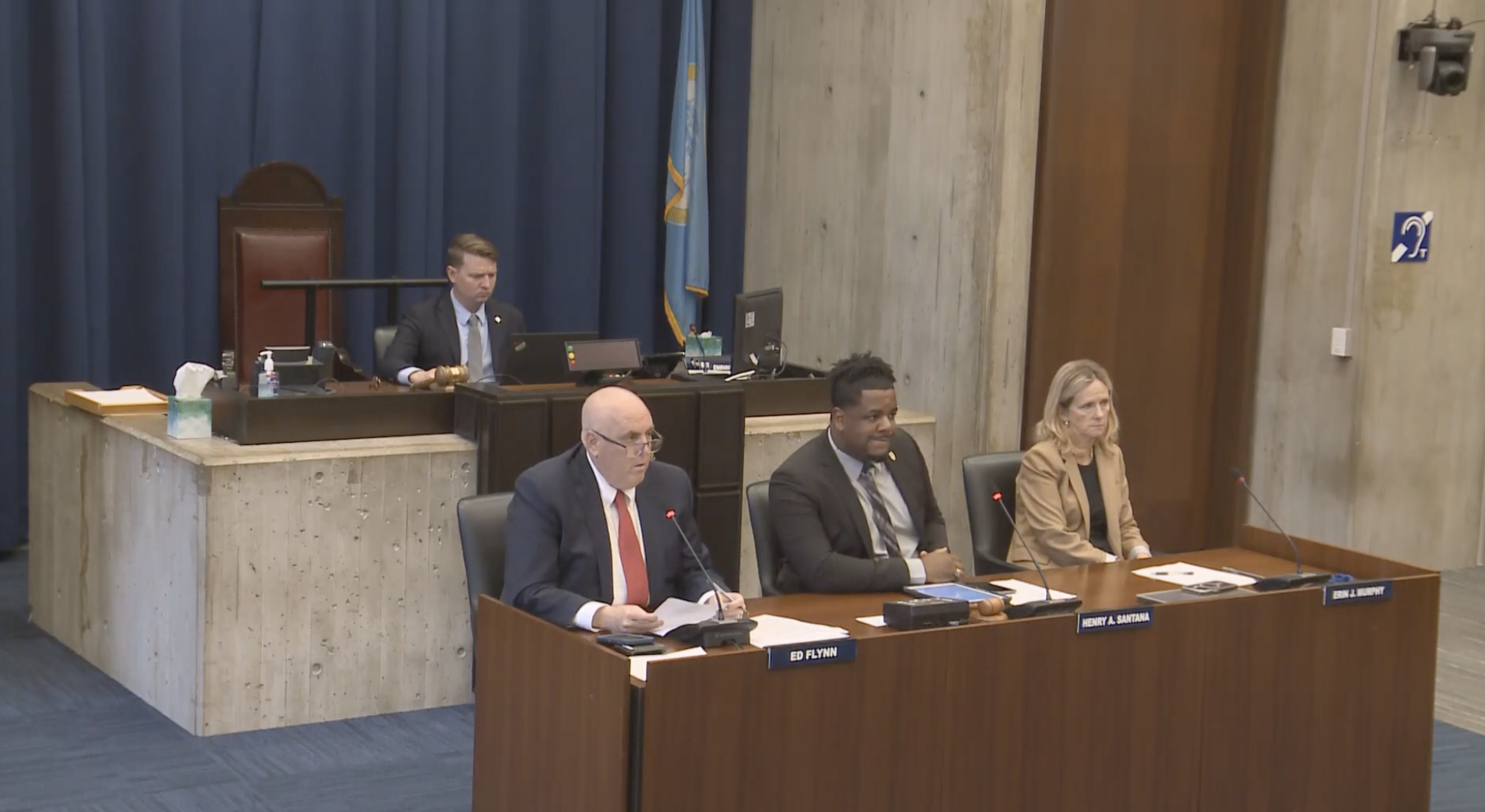
In a Boston City Council hearing on Monday, Sept. 15, representatives from the Boston Police Department said that the crime lab never received the $1 million allocation passed in fiscal year 2025 budget to add personnel and equipment for the testing of sexual assault kits.
Councilor Edward Flynn, who sponsored the hearing and fought for the $1 million for the crime lab, went back and forth with BPD representatives Boston Police Deputy Superintendent Victor Evans and Kevin Larade, the director of forensic quality control, about the funding for sexual assault kit testing.
Flynn asked Larade as to why the crime lab was not doing Y-screening, a technique used in processing sexual assault kits. He said that the lab “didn’t have the funds to do it.” He estimated the cost at about $300,000, the exact amount allocated for new equipment in the budget, with the remaining $700,000 designated for additional personnel.
“We did not get that million dollars,” Larade said.
However, Councilor Erin Murphy confirmed that the budget amendment had passed with the support of all 13 councilors.
A city council report reveals that the $1 million allocation was listed as part of a recommended city council budget override in June 2024, according to the Boston Herald. However, it was never actually given to the crime lab because there was no proposal for where the money was going to come from to balance the budget.
Larade said that additional resources would aid the crime lab in getting sexual assault kits tested within 30 days, the amount of time mandated by the state legislature in 2018. In past years, the BPD has struggled to meet this goal. It failed to test 93 of the 186 kits in 2023, 39 of the 144 in 2022 and 24 out of 123 in 2021.
Evans and Larade underscored the difficulties the department has faced in meeting the mandate and the strain it puts on the lab’s resources. “There’s no wiggle room at all, we are getting cases done [in] 29, 28, 27 days, and it’s all hands on deck,” said Larade.
The effort to get sexual assault kits quickly processed in Massachusetts is part of a nationwide push to eliminate the backlog of kits throughout the country, as many sexual assault kits have gone untested for years on end, revealed by USA Today’s investigation into the backlog.
This is typically either because detectives or prosecutors never request DNA analysis after kits are booked into evidence, or due to excessively long wait times for testing when they are sent out to crime labs, according to End the Backlog, a nonprofit organization working to end the rape kit backlog in the United States.
According to the organization, Massachusetts currently has 2,593 untested rape kits, but also has strong reform laws that match the pillars End the Backlog identifies: maintaining a statewide inventory, testing backlogged as well as new kits, implementing a tracking system, allowing victims the right to know the status of their kits and allocating funds for these reforms.
As for the city council’s next steps, Councilor Henry Santana, chair of the Committee on Public Safety and Criminal Justice, said at the conclusion of the meeting that “there will probably be more follow-ups from our committee in terms of the allocations that the council made [to the crime lab].”