By Jaime Suarez Del Valle
Boston University News Service
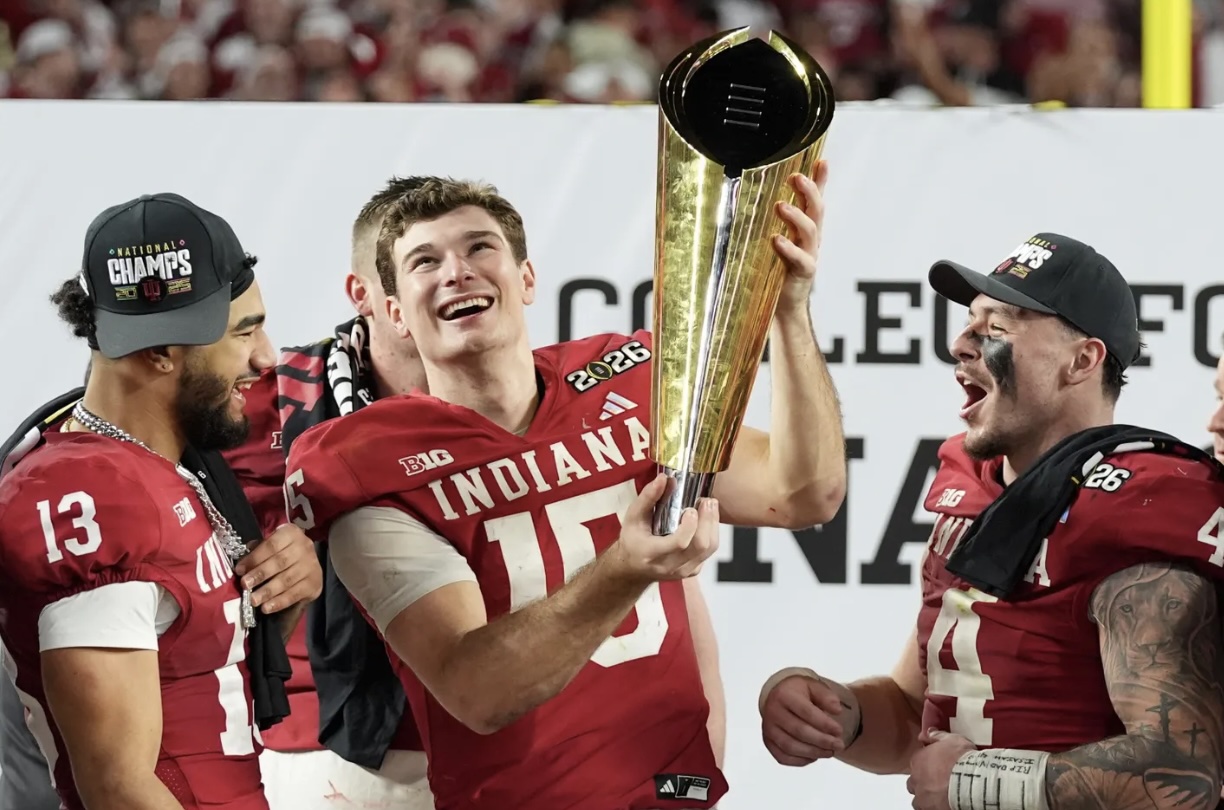
There is a new dawn for college football, which continues to evolve as NIL, conference realignment and playoff expansion change the landscape. The 2025 FBS season gave us many intriguing storylines, such as the Lane Kiffin coaching saga, Bill Belichick’s underwhelming debut as North Carolina’s coach and Indiana’s historic undefeated championship season led by Curt Cignetti and Heisman-winning quarterback Fernando Mendoza. One developing thread, however, is that for the third-straight season, a team from the Southeastern Conference did not win a national title — not even making the title game. With programs like Alabama and Georgia losing their grasp on what seemed like automatic championship appearances, is this the end of the SEC as the most dominant football conference?
The SEC’s dominance of the national title game in the 21st century cannot go understated. Since 1998, an SEC team has appeared 26 times in the title game and won it 16 times across the BCS and CFP formats. This includes nine appearances from Alabama alone, which is considered the top program of the 21st century under head coach Nick Saban. Other highly regarded programs like Florida, Auburn, Georgia, LSU and eventual SEC members Texas and Oklahoma canvass the rest of the championship game’s history with multiple appearances. Meanwhile, other big programs like Ohio State, Florida State, USC and Oregon managed a few appearances throughout this era of SEC saturation.
While the SEC is still highly regarded by pundits and fans as the best conference, championship results have diminished in the NIL era, and even more in the early life of the expanded playoffs. Since NIL became legal in 2021, the Georgia Bulldogs won two consecutive championships, one of those against Alabama. But since the 2023 season, neither team has reached the title game. Instead, the Big Ten has reigned supreme, with three out of four teams winning it all. Most notably, the Indiana Hoosiers, one of the worst programs ever, went undefeated all the way, with one of those wins being a trouncing of Alabama in the historic Rose Bowl. Indiana seems like an outlier because of the two year turnaround, but looking at how it happened can show us how college football has changed and possibly left the SEC behind.
The timeline of Indiana’s investment into this championship run started in 2024 with the hiring of former James Madison head coach Curt Cignetti, who led the Dukes to multiple winning seasons in his six years there between the FCS and FBS levels.
“I win. Google me,” is what Cignetti said in his opening press conference with Indiana. He was not wrong.
Cignetti led the Hoosiers to an 11-2 record — their first double-digit win season ever — and a playoff berth before exiting in the first round to Notre Dame. A key aspect of this rebuild is that Cignetti brought many of his players from JMU to Indiana, a feature of NIL legality. This meant that his system translated a lot easier to the new program. Then another pivotal figure in Hoosier sports enters the timeline: Mark Cuban, star of Shark Tank, former primary owner of the Dallas Mavericks and billionaire alum of Indiana. Cuban had donated lots of money to the school in the past, but now he was committed to contributing to the football program’s transfer portal efforts. The Hoosiers then brought in former University of California, Berkeley quarterback Fernando Mendoza through the 2025 transfer portal alongside other important players like Roman Hemby and Pat Coogan. The rest is history.
Indiana’s success was a mix of all the right elements: a floor-raising head coach’s system and a Heisman-winning quarterback becoming a ceiling-smashing pair thanks to smart NIL spending. The fact that the Hoosiers had zero 5-star recruits and only two 4-star recruits in their roster makes their feats all the more impressive. It also makes this dip in SEC championship teams more intriguing, as the SEC in its gilded history led in star-studded rosters and big spending. Alabama, for example, was the biggest spender on its football program in the 23-24 season at $112.2 million, according to The Athletic. Playoff appearances have not slowed down either as the SEC has been represented a total of eight times in the past two seasons under an expanded playoff field: by Tennessee, Texas and Georgia in 2024; and by Georgia, Texas A&M, Mississippi, Oklahoma and Alabama in 2025. Only Texas, Alabama and Mississippi have won a playoff game in this format, with Bama and Miss knocking out two other SEC teams, Oklahoma and Georgia, respectively. Safe to say that the SEC has had opportunities to renew their dominance as a conference, but ultimately gets knocked out of the bracket. Meanwhile, the Big Ten is thriving in this format, with two of its most prestigious programs (Michigan, Ohio State) and its worst program (Indiana) winning it all.
Circling back to the question at hand: is this the end of the SEC empire? Probably.
NIL unlocked the ability for many programs to (legally) pay their athletes, drawing away prospects who normally flocked to the American south away from this region and into other programs in the U.S. Regardless, teams like Alabama, Georgia and Texas rank high among this year’s recruiting class, and LSU with the Lane Kiffin hire has the #1 ranked transfer portal class according to ESPN, which includes landing former Arizona State passer Sam Leavitt.
There are a lot of issues affecting college football right now. Super conferences, conversations about the place of Group of Five teams in an expanded playoff, and the ease of mobility among players have all been heated topics of discussion over the past year or so. However, the playing field has been leveled, and the SEC is no longer competing with itself for the national title. Many teams now see what Indiana managed to do and have hope that they can fix their teams and make a championship run. It is up to the SEC blue bloods to adapt to the environment of college football and retool to continue competing against the other top programs in the country.