By Briana Leibowicz Turchiaro
Boston University News Service
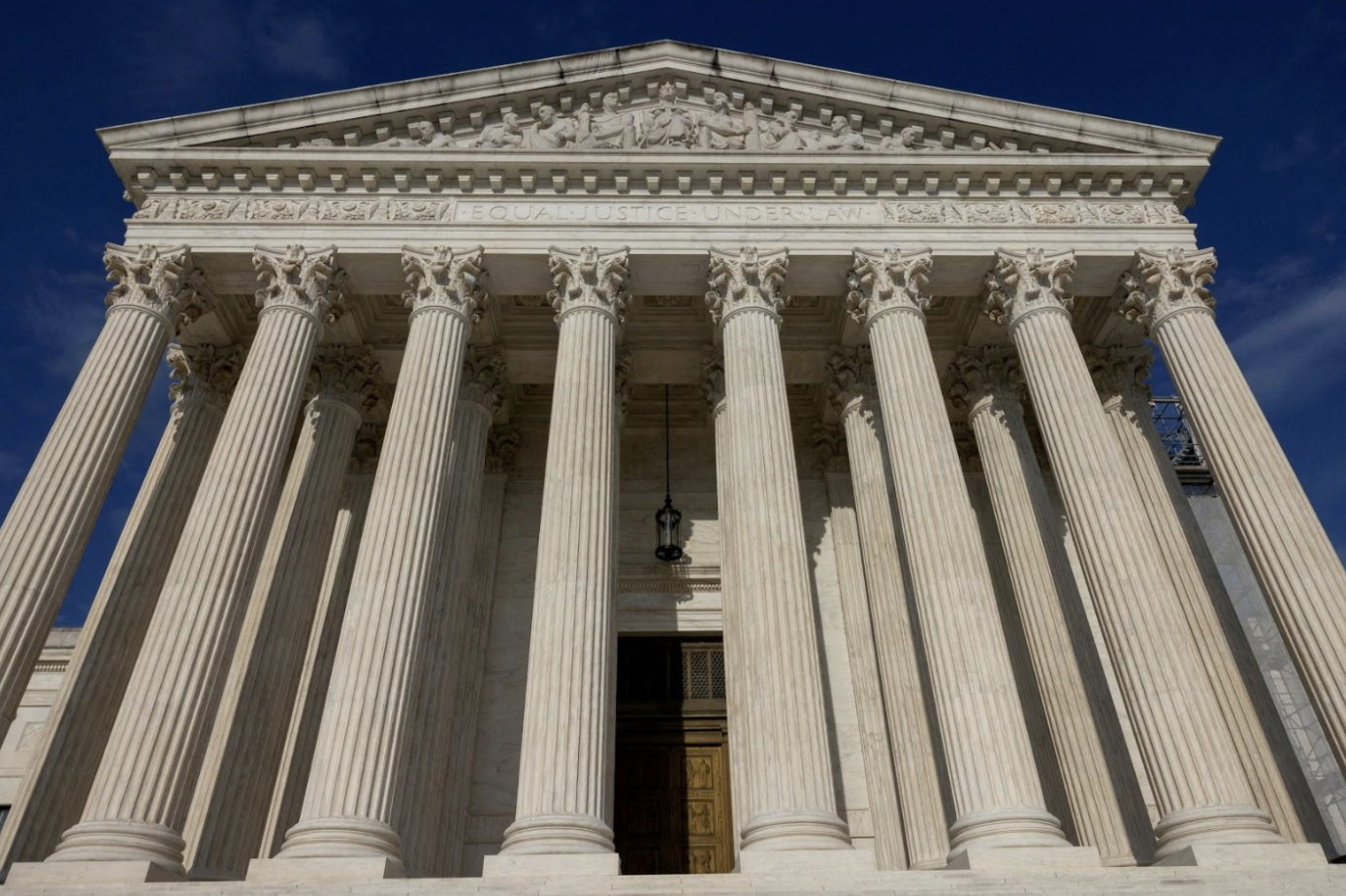
On Monday Oct. 6, 2025, the U.S. Supreme Court began a new term. Topics related to President Trump’s tariff policies, transgender athletes, and anti-conversion Colorado statutes are all issues at stake in the current docket.
After a summer of several rulings in favor of Trump’s policies from the court’s shadow docket, the docket reserved for emergency cases that need expedited rulings, questions have arisen about the court’s rulings in upcoming cases on the merits docket.
Most of the cases are decided unanimously by the court, especially when it comes to narrower questions such as interpretations of a statute’s language. The court differs largely in opinion when the moral controversial issues are brought up, according to Stephen Wermiel, a professor of constitutional law at American University Washington College of Law.
“The court seems to be pretty much divided 6-3,” Wermiel said. “I think that reflects a very conservative traditional philosophy that will definitely affect how the court decides the major instances this term.”
One of the most anticipated cases is Chiles v. Salazar, where the court has to decide whether or not a Colorado law that bans anti-conversion therapy violates the free speech clause of the First Amendment.
The case arose from the dispute of Kaley Chiles, a Christian licensed professional counselor in Colorado, who specializes in clients dealing with a variety of mental health concerns, notably gender dysphoria and sexuality.
Chiles’ work frequently involved counseling clients, including minors, who held religious beliefs and self-identified goals related to diminishing same-sex attractions or aligning gender identity with biological sex. Chiles brought suit claiming that the Colorado law banning conversion therapy for minors in 2019 violated her First Amendment rights.
The Supreme Court agreed to hear an appeal of a lower court’s decision that so far has appeared straightforward. The 10th U.S. Circuit Court of Appeals upheld the district court’s ruling, finding the Colorado law constitutional because it regulates professional conduct.
The court also has a series of cases involving transgender women in sports in the upcoming docket.
“I think they’re going to rule against transgender interests in two or three cases that will add to the court’s hostility towards transgender rights claims,” Wermiel said. “So that’s another area where the court could make a dent.”
One case, West Virginia v. B.P.J., asks whether or not the Fourteenth Amendment prohibits states from assigning students to girls and boys sports teams based on their biological sex. Another similar case, Little v. Hecox, asks whether laws that limit participation to women and girls based on biological sex in sports teams violate the Fourteenth Amendment’s equal protection clause.
Wermiel predicts these cases to continue the court’s hostility towards transgender rights, and ultimately “have a significant impact on how we view the status of transgender persons in our society.”
The reaction that younger generations might have to these decisions is polarizing, said BU political science student Zachary Bader.
“There’s, like two generations Zs,” Bader said. “One is the kind of red pill enjoyers, the ultra conservatives, the religious. And then there’s the very leftist or the liberal.”
The rulings of the cases on the shadow docket largely favor Trump, allowing the president large deference for his policies.
Even the use of the shadow docket itself has been at an unprecedented rate. An analysis by Georgetown Professor Stephen Vladeck found that the second Trump administration has amounted to as many shadow docket applications — 19 — in its first 20 weeks, which is the total number of applications throughout all four years of the Biden administration.
“The nature of judicial appointments has blurred the line between what is politics and what is jurisprudence,” Bader said. “Especially in the Trump era.”
According to the Brennan Center, out of the 22 decisions the Supreme Court has decided on the shadow docket since Jan. 20 2025, 19 of them have been in “at least partially” in favor of Trump’s administration, while three have been against.
These rulings have made the Supreme Court seem politicized – a problem considering the judiciary is supposedly the most independent branch of government. The lack of separation brings up concerns of the Supreme Court being dependent on the executive branch.
Wermiel said these rulings and these pending cases suggest presidential power will be one of the most important discussions in the cases on the merit docket.
“I am very confident that the Supreme Court will rule however the Trump Administration wants them to rule,” Bader said.
A popular case in the shadow docket was the Supreme Court’s opposition to the administration’s use of the Alien Enemies Act, a 1798 wartime authority that allows presidents to detain or deport citizens of an enemy nation. Wermiel said the Trump administration’s use of the act in March “pushed the boundaries too far” but the court’s ultimate oppository stance was still “one outlier among two dozen.”
Although most of the decisions in the shadow docket have allowed the president to adopt his policies, these have been in the form of delaying decision making until another is made. This means the court has temporarily assumed an extensive power from the president’s authority, depending on the final outcome of other cases, Wermiel said.
Because of this position, Wermiel said it is “too soon to tell” how the Supreme Court will approach the controversial issues on the merits docket.
“I tend to think of the court as not just another political institution,” Wermiel said. “But it’s getting harder and harder to maintain that position as the court increasingly, in high-profile volatile cases, votes as a Republican majority.”