By Dorree Sainoi Ndooki
Boston University News Service
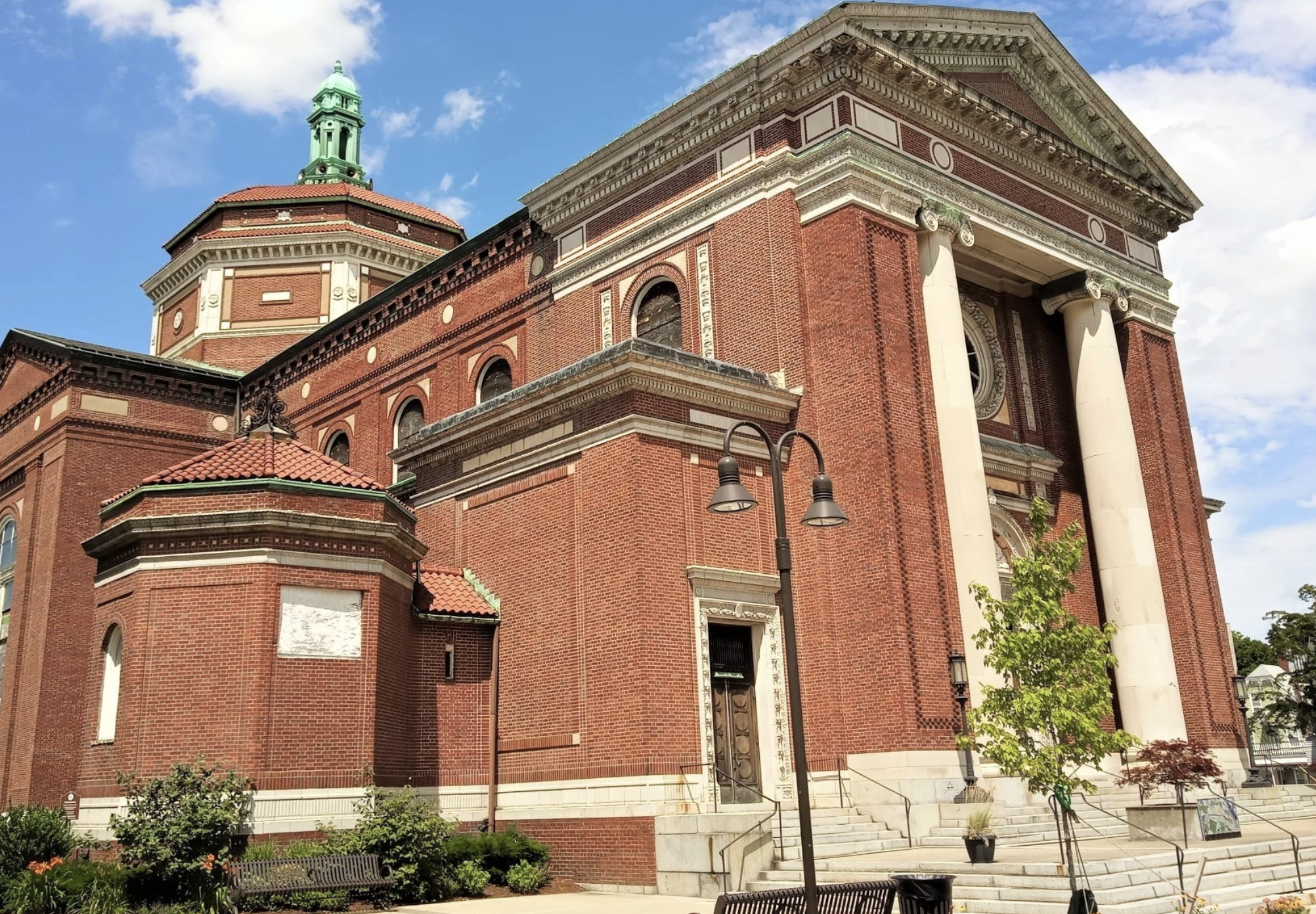
In a time when affordable housing is scarce, a small Jamaica Plain community has created a model that the City of Boston can replicate. Hyde Square Task Force (HSTF), a local community-oriented task force, bought and proposed reconstructing the Blessed Sacrament Church into a space that could double as affordable housing and a community performance space in 2014. Their vision, in collaboration with affordable housing development company Pennrose LLC, will transform this abandoned church by 2027.
The long-standing vacant church will undergo a much-needed transformation. A 55-unit, mixed-income affordable housing development will be erected for the local community. Originally built in 1917, attendance was consistent and even increased in the 80s and 90s, but the decaying structure became too expensive to reconstruct, leading the Catholic Archdiocese to close its doors until the HSTF took ownership in 2004.
The Hyde Square neighborhood is well known for its rich cultural and historical ties to Latinx immigrants. As a result, the Boston City Council officially declared it Boston’s Latin Quarter in 2016. With support from locals and artists, it was later also declared an official Massachusetts Cultural District in 2018. The refurbishment of the Blessed Sacrament Church, a widely celebrated space, is vital to upholding the culture of this neighborhood and will further unite the community by creating programming accessible to its residents.
The HSTF purchased the building in 2014, and a development plan was created in 2019 that highlighted the need for low-income housing and a multi-use community space. Pennrose officially joined the project in 2021 after responding to an HSTF request for proposals.
According to research done by WGBH, funding for this project has been provided through a $37.6 million tax-exempt bond purchased by Citizens.
MassDevelopment reports that the 63,148-square-foot building will house 13 two-bedroom units, 25 one-bedroom units, and 17 studio units. Residential candidates that earn up to 80% of the Area Median Income will be eligible for 10 units; 27 units will be available for those earning 60% AMI; 7 for 50%; and 11 for 30%.
The reconstruction will also include 22 parking spaces, 55 bike parking spaces, and a 6,500-square-foot community space. Its centralized location will encourage community building in the neighborhood and make it easier for residents to commute to work.
Charlie Adams, resident of development at Pennrose, shared his thoughts on the project’s progress. “It was always a community engagement process,” said Adams, talking about the local community’s role, he shared,
“The task force had a real open process with the community to get input on what would be done. Our proposals were made available to everybody,” Adams said. There was a series of meetings in Spanish and English and all different formats for people to be able to participate in the process.”
There are challenges to demolishing a historic building, such as a crumbling foundation which requires an entirely new steel frame to support the older sections of the structure. Other issues will arise due to the need to replace the roof and the over 100-year-old bricks without destroying the facade. In collaboration with the Pennrose and other local organizations, HSTF plans to protect the building’s facade while entirely altering the interior to accommodate a new community space with a projected capacity of over 200.
Construction began this past summer, starting with interior cleanup, hazardous-material removal, and environmental preparation at the building site. There will be targeted demolitions of specific exterior elements, including doors, windows, and steps.
Although this project is unique, its conception can serve as a replicable model for the countless historical buildings in and around Boston. Mayor Wu has launched several affordable housing initiatives to address one of the country’s biggest housing crises. These programs are beneficial, but often overlook the many abandoned historical buildings that could be renovated and reintegrated into Boston communities such as the Blessed Sacrament Church.