By Carol Khorramchahi
Boston University News Service
The opening ceremony is the Olympics’ most predictable event, and its most revealing one. Everyone knows the beats. Parade. Oath. Flame. A few minutes of artful symbolism to convince the world that the host nation is not just a place, but an idea.
And yet the 2026 Milano Cortina opening ceremony still managed to feel like a live argument about what the Games are for.
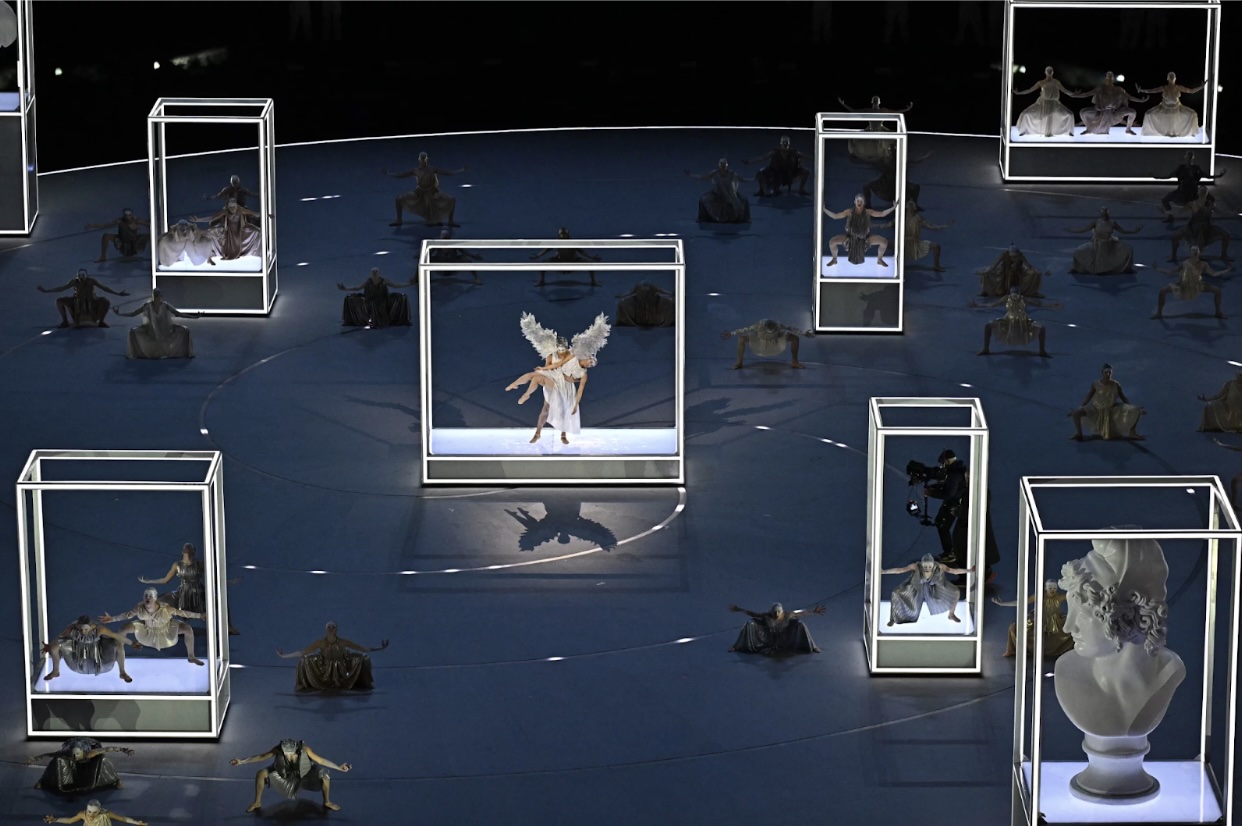
Italy staged its welcome Friday night at San Siro in Milan with the kind of high production confidence that says, “yes, we know you’ve seen opening ceremonies before, but have you seen ours?” Pop star Mariah Carey performed an Italian classic, “Volare,” and one of her own songs, adding American star power to a night otherwise packed with Italian cultural signaling. The official Olympics site later framed the night as a tribute to Italy’s history, arts and culture, down to the song choices and staging.
But the most talked about moments were not all choreographed. When Israel’s small team entered the stadium, a smattering of boos broke through the noise, quickly swallowed by music. When the U.S. Vice President JD Vance appeared on the stadium screens, the crowd’s cheers for American athletes curdled into boos for the official, according to Reuters.
That tension is not a glitch in the Olympic system — it is part of it. Opening ceremonies are built to present unity, but they happen in front of real crowds with real politics, which means the “one world, one stadium” fantasy gets interrupted by the world.
What the opening ceremony is actually for
The International Olympic Committee lays out the ceremony’s core structure with bureaucratic calm: the parade of nations, the Olympic flag, the oaths and the lighting of the cauldron. It is ritual, not improvisation.
But the opening ceremony has another job, and everyone knows it, even when they pretend it is just pageantry:branding.
For hosts, this is the night to “advertise” the country without calling it advertising. Opening ceremonies are one of the few global broadcasts where a nation can present a curated self portrait, a chance to frame its history and identity before medals, scandals and scoreboards take over. Scholars of sport diplomacy and nation branding have noted that mega events like the Olympics function as image-making platforms for host countries pursuing social, political and economic goals.
Milan and Cortina are not trying to convince the world they exist. They are trying to convince the world to come back when the Olympic flame is gone.
What Italy chose to sell
Milano Cortina’s opening ceremony leaned into Italy’s greatest advantage: it does not have to invent glamour. The country can point at its own cultural resume and let the world nod along.
The organizing committee’s creative choices emphasized Italian cultural touchstones and international star performances, with Carey’s “Volare” moment functioning like a glossy bridge between Italy’s nostalgia and its modern global appeal, according to People. The ceremony itself was staged in a way that fit the Milan pitch: modern, urban, fashion adjacent and confident that culture is a form of power.
The ceremony also reflected the structural reality of these Games. Milano Cortina is unusually dispersed, with events spread across multiple sites. Even the opening ceremony reflected that decentralized design. AP live updates described how images of national teams were broadcast into San Siro from other cluster locations.
In other words, Italy is hosting a Winter Olympics built like a constellation, not a single village. The opening ceremony had to sell cohesion.
The moments that did not behave
The boos were a reminder that the Olympics can still be a political microphone, even when the script begs the crowd not to use it.
Reuters described the reaction to Israel’s team as mixed, with boos that were quickly drowned out.Vance’s reception was sharper: the stadium audio captured a noticeable turn when he appeared on screen, with protests earlier in the day underscoring that U.S. politics traveled to Milan too.
To understand why opening ceremonies matter, look at what happens when the audience breaks the mood. For a moment, the host nation is no longer controlling the narrative — the crowd is.
“What you didn’t see on TV”
Opening ceremonies are designed for broadcast, but broadcast is also where the illusion gets edited. The U.S. television experience is famously not the same thing as being in the stadium, which became a talking point again this year as viewers compared what aired against what social media clips suggested happened live. USA Today Sports framed it bluntly as “what you didn’t see on TV.”
This is not just a media gripe. It is part of how opening ceremonies function. They are built to be filtered. They are designed to be remembered in highlights, not in full.
Why host cities keep doing this anyway
When it works, it is priceless.
Beijing 2008 used its ceremony to project national power and historical continuity on a scale that felt deliberately impossible to ignore. London 2012 used humor and spectacle to sell a story of modern British identity. Those ceremonies were not just entertainment, they were international self definition, as a PBS overview of opening ceremonies’ history argues in its comparisons of how host nations use the stage.
That is the lineage Milano Cortina is chasing. Not just a “nice show,” but a signature.
Italy’s message was clear: come for the sport, stay for the culture, remember us as elegance. And for the most part, it worked. Even the boos, in a strange way, reinforced the central truth of an opening ceremony. It is not only an advertisement. It is also a mirror.
A host can choreograph the performance, but it cannot fully control what the world sees in it.