By Allyn Tucker
Boston University News Service
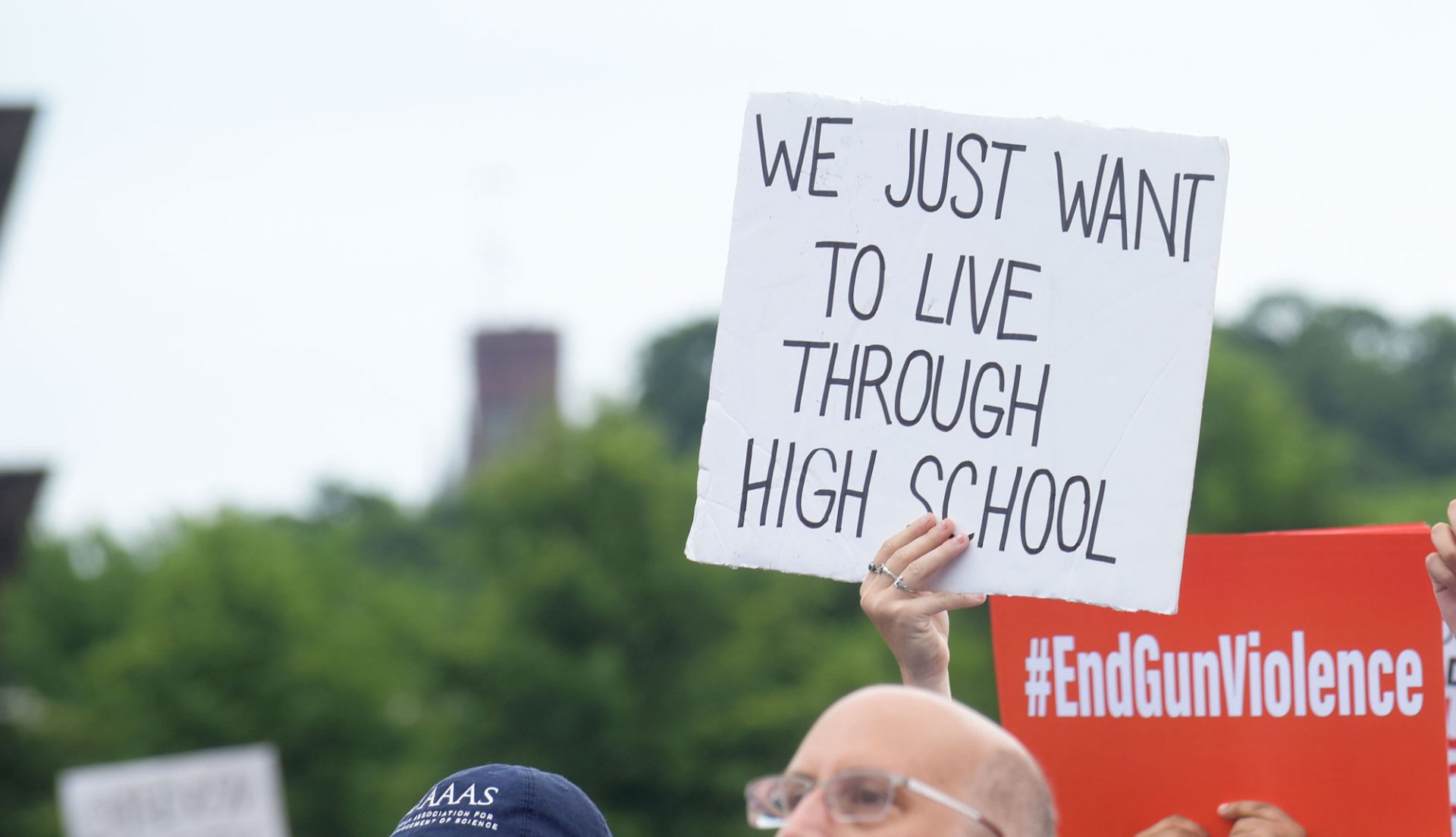
In light of the Apalachee School Shooting in Georgia on Sept. 4, the conversation regarding gun violence and gun control has one again been making national news. While the gun violence epidemic can strike far away, local Massachusetts parents and students feel the concern of this public health crisis reaching their doorsteps.
Two students and two teachers were killed in Winder, Georgia, making it the deadliest school shooting in the United States since March 2023. The recent tragedy keeps in trend with the growing number of deaths of children and teenagers due to firearms, which claimed responsibility for 18% of childhood deaths in 2022, according to the CDC and Prevention Wonder database.
Back in the northeast, students at Boston University are expressing their fears and discomfort with the rise of gun violence in schools in recent years. BU’s Students Demand Action (SDA) chapter is one of many organizations in Massachusetts looking to make schools a safer place for students and faculty.
“Going to classes the next day after something like Georgia is stressful and something very difficult,” said SDA Vice President Sarah Bores. “There are people at a university this big that have experienced gun violence or are survivors of gun violence.”
Gun violence surpassed car accidents in 2020 as the leading cause of death to children and teens in the US, but Massachusetts is working to fight against contribution to this statistic. Everytown for Gun Safety ranks Massachusetts fifth in the country for gun law strength, contributing to its second lowest gun death rate among the states.

Former Congresswoman Gabby Giffords’ organization, Giffords Law Center to Prevent Gun Violence, reports that as the national rate of gun deaths increased by 36% nationwide from 2013 to 2022, Massachusetts’ rate only increased by 18%. Despite this statistic, faculty must still prepare for the risk of gun violence.
“After the shooting in [Lewiston], Maine last fall, I learned that no area is safe from the threat of gun violence,” said Emily Cummings, assistant teacher at the BU Children’s Center. “As long as there are guns, there is a risk, and as long as we are in a school, we are a target.”
In addition to the gun control debate resurfacing following the tragedy in Georgia, this November’s general election provides a platform where many politicians run with this debate being a key promise of their campaign.
Many voters’ decisions will be affected by a candidate’s position on gun control in the upcoming election. As a teacher, Cummings sees the issue as make-or-break in determining where she will cast her votes.
“Gun control is a huge issue among the teaching community,” she said. “Being a teacher is already hard enough without the worry of you and your students being in mortal danger.”
While many members of the Democratic party, including President Joe Biden, have called for stricter gun legislation nationwide, guns have been a major feature in many Republican campaigns. For example, the controversial advertisement paid for by Brian Kemp featuring the current Georgia governor pointing a gun at a young man. Many voters resonate with this media, including the 4.3 million members of the National Rifle Association, the most prominent gun rights lobbying organization in the nation.
Despite many candidates expressing their individual ideas of appropriate gun legislation, Bores was disappointed that gun violence was not addressed enough in last Tuesday’s presidential debate hosted by ABC.
“There was not a single question [asked]…but it’s something that’s directly affecting every community, especially young students,” she said.
The presidential candidates hold conflicting views on what gun control should look like in the US. While Vice President Kamala Harris, a gun owner, vows to push for stricter gun control legislation nationwide, former President Donald Trump supports rolling back Biden-era gun restrictions. For Bores, they need to pay attention:
“If politicians really want to appeal to the young vote… we are in the schools.”