By Lea Tran
Boston University News Service
Chinatown remains one of the top neighborhoods in Boston susceptible to climate change. Residents are wary of changes as Mayor Wu shares climate change initiatives as her reelection campaign continues.
Chinatown is the hottest neighborhood in Boston with the average daytime temperature in July rising to 105.5 degrees Fahrenheit, nearly 6 degrees hotter than the Boston average of 99.5 degrees, according to data from the Boston Heat Resilience Plan shared by the mayoral office.
Annie Tran from ACCESS, a non-profit in Chinatown, explained how during the summer heat waves, there were very few spots in the area where people could go to protect themselves from the heat.
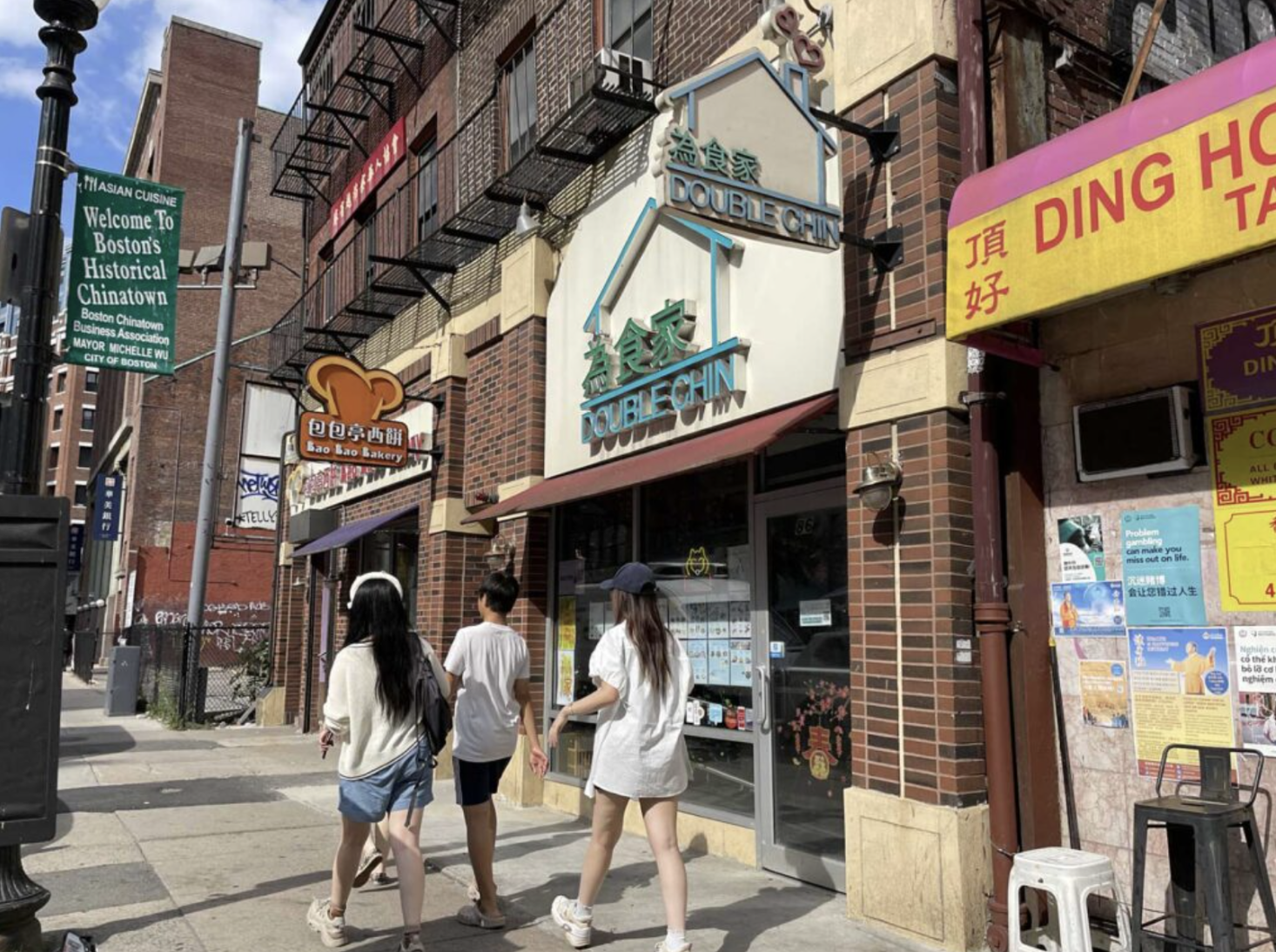
The neighborhood’s layout and architecture is one of the main contributing factors to Chinatown’s sensitivity towards climate change.
Only around 8% of Chinatown is considered a park space, amounting to just over five acres. In comparison, 23% of the Greater Boston area is considered park space. Only 12% of Chinatown is made up of greenery, including trees and shrubbery.
This lack of green space allows for less shade and cooling to occur throughout the neighborhood. As a result, families try to avoid going outdoors at all during the summer, explained Tran.
Nearly 42% of the neighborhood are buildings and 31% roads. These densely developed areas allow for the heat to be easily absorbed.
According to the Boston Heat Resilience Plan, Chinatown’s hotter microclimate is a result of numerous factors, including “less green space, wide streets with limited street trees, building characteristics, and density.”
In August 2025, a draft of the Boston 2030 Climate Action Plan was released by Mayor Wu. The document proposed a goal of 50% emissions reduction by 2030, along with other specific initiatives targeting protecting coastlines, heat management and energy efficient building development.
Some initiatives that have been proposed to combat the heat in Chinatown include increasing shade access, making cooler surfaces with lighter colors and creating more energy efficient homes.
Pok Oi is a new apartment complex that just started renting to residents last year. The building is designed to LEED Gold standards — the second-highest certification for sustainability from the U.S. Green Building Council.
Tran mentioned how more buildings are creating green spaces on roofs and near the Chinatown gateway. However, with these new building developments, residents are worried what these changes could mean for the community.
“With the new buildings and new development rising, there is quite a number of displacement that could happen, gentrification that could happen, and although the buildings are geared towards income eligible families, it’s still pretty high in terms of affordability,” Tran said.
The new Pok Oi residence, an affordable housing option, is still not as cost efficient for all families.
“One family that I particularly work with, they currently have a household income that’s like less than $30,000 but their rent is two is a little bit over $2,000 a month,” Tran said, noting how nearly half their salary is spent on rent.
In terms of the mayoral election, Mayor Wu’s climate initiatives and changes for Chinatown have created mixed reviews amongst residents’ support.
“One way supports Mayor Wu I think only because they relate with her,” Tran said. “She has that Asian American background. […] So a lot of people in the Chinatown community do relate with her. I think visually, they relate with her.”
Mayor Wu is the first woman of color to be elected as mayor of Boston. She is from a Taiwanese background.
“On the other hand, I think people are very hesitant about changes that happen in Chinatown, because when they see things like building development, building changes, building plans, it really does stir up the community,” Tran said.
Chinatown has the largest population of East and Southeast Asian residents in Massachusetts, and has a history spanning back to 1870 when many Chinese immigrants began to settle into New England.
Many residents fear that new building changes could result in displacement and losing the cultural aspect of what Chinatown is for the greater Asian community of Boston.
Residents’ primary concerns seem to be more directed towards building developments in Tran’s opinion, and not necessarily about climate change impact.
However, there are members of the community who are advocating for climate change initiatives.
“I think for Mayor Wu, she is doing a good job in trying to inform the younger generation for sure, and trying to get them more involved with trying to be with the business and trying to help change their community to care more about climate change and being sustainable,” Tran said.